Plastic waste rarely comes from one place in a large business. It can include stretch wrap from receiving, packaging film from production, crates and buckets from operations, and other rigid plastics from shipping or distribution.
Each material can have different handling and recycling requirements. When those streams end up mixed together, stored in the wrong place or collected on a schedule that doesn’t match production, the result can be more waste, extra handling and missed recovery opportunities.
For manufacturers, warehouses and food and beverage companies, improving commercial plastic recycling means looking at the whole system, from where material is generated to how it is prepared, stored and collected.
Evergreen helps businesses across Dallas-Fort Worth (DFW) and Central Texas develop industrial plastic recycling programs that fit their operations.
Start by Identifying the Plastics You Generate
A facility may call it “plastic,” but the recycling opportunity depends on what the material actually is. Plastic film, rigid containers and production scrap may require different preparation and handling. Material type, condition, volume and available recycling markets all affect what can be recovered.
Start by mapping where plastics are generated across your facility, including receiving, production, packaging, warehousing and shipping.
Common materials businesses may generate include:
- Stretch wrap and pallet wrap: Common in receiving, warehousing and distribution.
- Plastic packaging film: Used in manufacturing, packaging and shipping.
- Rigid plastics: Including certain buckets, crates and industrial containers.
- Plastic production scrap: Offcuts, trimmings and other manufacturing materials.
Not all of these materials can be combined or recycled through the same program. Evergreen’s complimentary waste audits help businesses identify their material streams, volumes and potential recovery opportunities.
Keep Plastic Recycling Streams Clean and Separated
Plastic can lose recovery value when different materials are mixed together or when recyclable plastics are contaminated with product, liquids, food residue or other waste.
Collection points should be close to where materials are generated, with clear guidance for employees about what belongs in each container.
For example, stretch wrap collected separately from general waste may be easier to recover than film mixed with other packaging. Certain rigid plastics may also require separation by resin type or grade.
For food and beverage operations, establish procedures for packaging exposed to product, water or cleaning processes, and confirm acceptance requirements with your recycling provider.
Evergreen works with customers to identify materials, understand program requirements and develop recovery setups suited to their operations.
Choose the Right Plastic Recycling Equipment and Collection Method
Plastic film and bulky materials can take up valuable floor, dock and storage space. Choosing the right equipment and collection method can reduce unnecessary handling, improve storage efficiency and keep operations moving.
Depending on the material, volume and facility layout, several options may be appropriate:
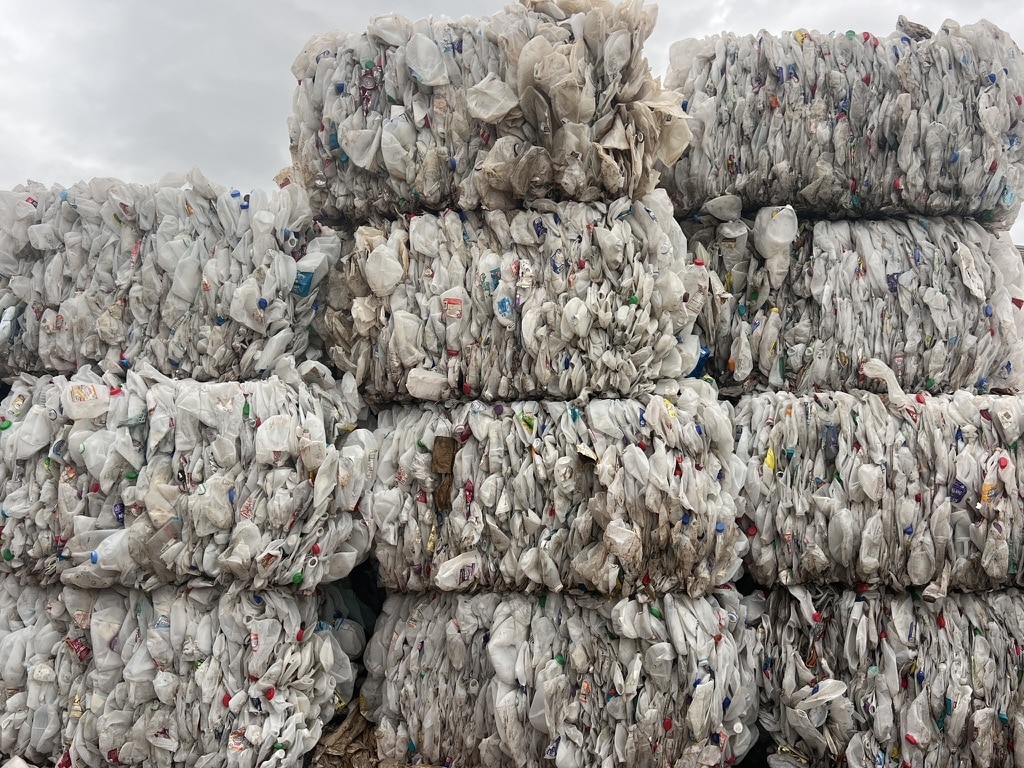
- Balers: Compact suitable recyclable plastics, such as certain types of stretch wrap and packaging film, into dense bales for storage and transportation.
- Compactors: Consolidate certain loose or bulky plastic materials, reducing storage requirements and potentially improving collection efficiency.
- Gaylords: Provide a practical way to collect and separate smaller volumes of loose plastics, rigid materials or production scrap.
- Open-top containers: Can accommodate larger or bulky plastic materials that may not be practical to bale, subject to material acceptance requirements.
- Trailers: Offer additional storage and collection capacity for facilities generating larger volumes of recyclable plastics, in lieu of a compactor.
The best option depends on how much material your facility generates, how quickly it accumulates, available space, labor requirements and downstream recycling specifications.
Not all plastics are suitable for baling or compaction, and equipment selection can affect recycling eligibility and potential rebates. Evergreen evaluates each operation to recommend an equipment and collection setup that fits its needs.
Match Plastic Recycling Pickups to Your Volume
Even with the right equipment, an unsuitable collection schedule can lead to overflowing containers, unnecessary forklift movements or disruptions to daily operations.
Evergreen’s bale route service supports businesses generating less than a full trailer load of recyclables, with scheduled and on-demand pickups. The service also includes baler rentals, installation, maintenance, repairs, staff training and baling wire supply.
For larger volumes, Evergreen offers tractor trailer service, including trailer drop-off for loading over time or scheduled live loads. Facilities using compactors or open-top containers can also benefit from collection arrangements based on material volume and available storage space.
The goal is to keep recyclable materials moving efficiently without creating additional work for your team.
Balance Recovery Value With Costs and Market Conditions
Not every plastic stream has the same recycling value, and rebate eligibility depends on material type, quality, volume and market conditions.
For example, clean, properly separated plastic film may have different recovery opportunities than mixed rigid plastics or contaminated packaging.
Businesses need a clear understanding of what can be recovered, how materials should be prepared and how collection costs and potential rebates are determined.
Evergreen helps identify recovery opportunities, establish service schedules and provide follow-up on service rates, rebate pricing and volume reports. This information helps operations teams evaluate performance and adjust their programs as needs change.
Build a Plastic Recycling Program Around Your Operation
An effective commercial plastic recycling program is about more than collecting material. It connects material identification, employee practices, equipment, storage, pickups and reporting.
Whether your facility generates stretch wrap, rigid plastics, production scrap or multiple recyclable materials, the right combination of equipment and collection services can help reduce unnecessary handling, improve efficiency and control costs.
Evergreen works with commercial and industrial operations across DFW and Central Texas to develop recycling solutions tailored to their facilities.
Not sure if your current plastic recycling setup is working as efficiently as it could? Contact Evergreen to schedule a complimentary waste audit and identify opportunities at your site.
Proudly serving DFW & Waco
Commercial waste & recycling done differently
Reach out for your free waste audit
📞 Contact us today | Serving DFW & Central Texas ♻️